“Be kind, for everyone is fighting a hard battle.”
~ Ian MacLaren
Earlier this week, I had to drive to the area where I grew up to take care of some paperwork related to the recent death of my mother. The errand was unexpectedly emotional for me.
I stopped at the local Trader Joe’s on the way back to the freeway and saw they were sampling a lemon ricotta cheese from Italy that I’d been curious about. It was heavenly, worthy of becoming a dessert, and I found myself telling the nice woman behind the counter about my mother’s recent passing and the difficult emotional experience I had just been through. I told her, “This delicious cheese is just the comfort food I needed,” and put a small wedge of it into my shopping cart. I thanked her and continued my shopping. As I moved through the aisles, a discreet sadness bubbled within me.
“Excuse me,” said a man wearing their signature Aloha shirt. As I looked up, he motioned to his left. I saw the lemon ricotta woman walking towards me, carrying a large, beautiful bouquet of flowers. “These are for you from Trader Joe’s,” she told me, her eyes filled with empathy, “I’m so sorry about your loss.”
I burst into grateful tears, overwhelmed by her simple but profound act of kindness. “Those were my mom’s favorite colors!” I confided, tearfully, joyfully, hugging her. It was a beautiful reminder of how the simplest gestures of kindness can have extraordinarily healing effects.
The experience reminded me of an article I was asked to write recently for YogaTherapy.health, published by the International Association of Yoga Therapists. In the short piece titled, “Breathing Through Grief“, I shared how, at the age of seven, my mom taught me to relax by breathing slowly and deeply, a method which she used to help us both cope with the death of her mother. Within the article I have included links to research supporting the benefits of conscious breathing techniques, as well as yoga postures, during times of grief.
The holiday season is wonderful, joyful and fun, but it can also be challenging emotionally, particularly for those who’ve experienced a loss. If you or anyone you know could use some extra coping skills during this time, please take a moment to read the article and perhaps share the information. A brownie, a hug or a spontaneous bouquet of flowers can help too.
Oh, and share a smile the next time you go to Trader Joe’s.
“The everyday kindness of the back roads more than makes up for the acts of greed in the headlines.”
~ Charles Kuralt
~~~~~~~~~
Cobbler is not just for dessert. This Savory Mushroom Cobbler combines a creamy mushroom filling with a rosemary biscuit topping. It is delicious as an appetizer, side dish or vegetarian main course.
Savory Mushroom Cobbler This is the best kind of winter comfort food. It is equally tasty when made ahead and reheated. A small serving makes a nice lunch when combined with a green salad. Use any combination of edible mushrooms such as: cremini, button, shitake, chantarelle, oyster, porcini, etc.
Filling:
1/4 cup extra virgin olive oil
1 lb assorted mushrooms, wiped clean, trimmed and chopped or sliced
2 large cloves of garlic, minced
1 teaspoon sherry vinegar or balsamic vinegar
1 tablespoon fresh lemon juice
1 teaspoon dried thyme
1/4 teaspoon paprika
Dash of cayenne
1 cup milk
2 tablespoons butter
2 tablespoons flour
Salt and freshly-ground pepper to taste
Cobbler topping:
1 & 1/4 cups all-purpose flour
1 tablespoon sugar
3/4 teaspoon baking powder
1/4 teaspoon baking soda
1/2 teaspoon salt
1/2 teaspoon crumbled dried rosemary
5 tablespoons cold butter, cut into small pieces
1/2 cup sour cream
1/4 cup milk
Optional: 4 to 8 oz crumbled soft goat cheese (chévre or feta)
Make mushroom filling:
Heat oil in a large saucepan or deep skillet over medium-high heat. Sauté mushrooms for about 2 minutes, stirring constantly. Lower heat to medium. Add garlic, vinegar, lemon juice, thyme, paprika and cayenne. Cook 3 to 5 minutes, or until mushrooms have softened. Add salt and pepper to taste. Turn off heat. Pour mushrooms and liquid into an 8″ x 8″ square glass or ceramic baking pan (should be at least 2″ deep). Wipe out saucepan and set aside.
In a small saucepan, heat milk over low heat.
Meanwhile, also over low heat, melt butter in the pan you just cooked the mushrooms in. Stir in flour and cook, uncovered, stirring occasionally with a wooden spoon, for 2 to 3 minutes. Remove from heat. Slowly whisk in the hot milk. Return pan to the heat. Simmer slowly, whisking constantly to smooth any lumps (do not boil). Then, over low heat, cook for 5 to 8 minutes or until thickened, stirring occasionally to prevent lumps. Season with salt and pepper to taste. Pour over mushrooms in baking pan and stir everything to combine well. Set aside.
Preheat oven to 350°F
Make cobbler dough:
In a large mixing bowl, whisk together flour, sugar, baking powder, baking soda, salt and rosemary. Add butter pieces and cut butter into flour mixture using a large fork or two knives. Mixture will resemble cookie crumbs.
Add sour cream and milk and stir with a fork until liquid is absorbed, then use your hands to knead dough several times until a sticky ball of dough is formed. Turn ball of dough out onto a lightly-floured surface and, using your hands or a rolling pin, press out into a flat shape that is large enough to cover the mushrooms. Lay flattened dough over mushrooms in baking pan. Using a sharp knife, cut out 5 small holes in dough to vent. Brush surface of dough with a little milk or some lightly beaten egg.
Bake 40 to 45 minutes, or until top is golden brown. Let cool 5 minutes or so. Serve hot, topped with crumbled goat cheese.
Makes 4 to 8 servings
Posted in Uncategorized | Comments Off on Comfort and Breath |
“A hundred times a day I remind myself that my inner and outer life depends on the labors of other men, living and dead, and that I must exert myself in order to give in the measure I have received and am still receiving.”
~ Albert Einstein
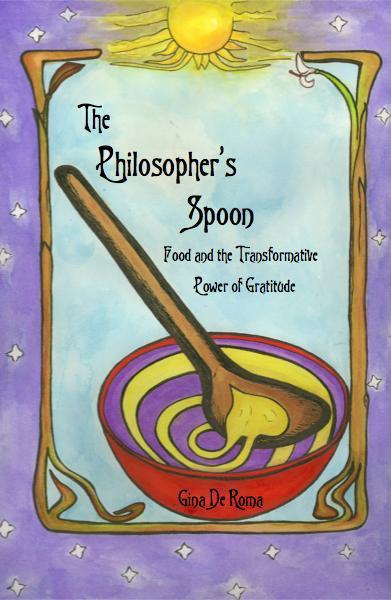
Ten years ago I published my first book, The Philosopher’s Spoon: Food and the Transformative Power of Gratitude, inspired by my personal experiences with gratitude and food. The following summer, I began writing The Philosopher’s Spoon Blog, which will be celebrating its decennial next June.
Several years before writing the book, I had managed to add an extra thirty pounds of body weight. I had tried nearly every trendy diet to get rid of them, but with each attempt, I seemed to gain more.
One day, sitting hesitantly in front of a plate of spaghetti (my internal monologue best illustrated by a thought bubble containing the word “Carbs!” followed by the screaming face emoji), I had an epiphany:
All over the world there are countless people who would be deeply grateful for this plate of pasta. Yet here I am, fearful of nutritious and delicious food that could possibly save the life of someone less fortunate….
… At that moment I made a decision to transform my inner dialogue about eating. I wanted to be grateful for every morsel that I receive. I realized that the lives, time and energy of many plants, animals and people contribute to the food that sustains me, energizes me and gives me life; the least I can do is say thank you.
As a result of beginning that simple practice, I eventually lost that extra weight and never put it back on. From a practical standpoint, this new attitude affected my food choices and my portion choices. In a less mundane sense, the spiritual shift made the biggest impact, setting me on a path of perpetually unfolding layers of discovery that I’m still traveling.
In honor of Thanksgiving Day, I would like to share with you the little prayer of thanks that I say inwardly, sometimes out loud, before each meal. If you don’t already give thanks before you eat a meal, or you do but would like to add some variety to your “saying grace” game, perhaps give it a try for a week or three. I begin this prayer with the words “Thank you to…” but one could also say “Thank you for…”, if that phrase aligns more closely with your spiritual sensibilities:
“Thank you to all the plants, animals and people who gave their lives, time and energy to bring me this delicious, nutritious and healing food. Help me transform this gift of life into a blessing that I can share with each person I meet, in thought, word and deed, and each, in turn, who is touched by them.”
Happy Thanksgiving!
~~~~~~~~~
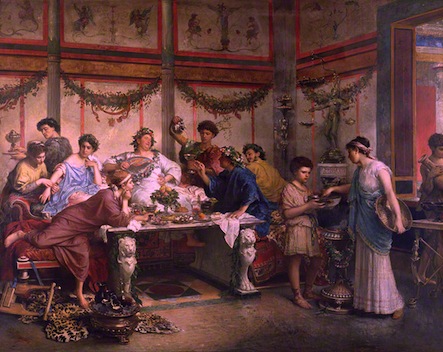
Posca fortem, vinum ebrium facit is Latin for “posca fortifies you; wine makes you drunk.” Ancient Romans thought that drinking full strength wine was barbaric and so they always diluted it. They also drank a beverage called Posca, which consisted of vinegar, sometimes flavored with herbs or honey and diluted with water. Posca was believed to be good for your health. This Cranberry Black Pepper Posca is a nice alternative to wine at your Thanksgiving table.
Cranberry Black Pepper Posca This tangy, not-too-sweet, non-alcoholic beverage makes a lovely addition to your holiday gatherings. I’ve updated the Roman method using a combination of cranberries, black peppercorns, cider vinegar, orange zest and sparkling water.
Vintage beverages are all the rage among the twirly-mustached pro and amateur bartenders, and you can’t get much more vintage than ancient Rome. Those for whom booze is a must can substitute sparkling wine for the fizzy water.
This recipe will also provide a bonus Spicy Cranberry Relish (recipe below this one).
For Posca
One (10oz) bag of frozen organic cranberries
1 tablespoon whole black peppercorns
1 teaspoon fresh orange zest (medium organic orange)
1/2 cup organic apple cider vinegar
3/4 cup organic cane sugar
1 cup water
To serve
Sparkling water (32-48 oz)
To garnish (optional)
Reserved frozen cranberries
And/or:
Fresh mint leaves
Thin slivers of fresh orange peel (very little white
You will need
A medium non-reactive saucepan*
A fine-mesh strainer
Mason jars (one 32oz, two 16oz) or similar airtight containers
*When a recipe calls for non-reactive cookware, use ceramic-lined cast iron or stainless steel (no aluminum or unlined cast iron).
To make posca:
Reserve several frozen cranberries for garnish (wrap and store frozen until ready to serve). Empty remaining cranberries into a medium, non-reactive saucepan*.
Lightly crush peppercorns. You can do this in a mortar and pestle or by placing peppercorns into a plastic baggy and crushing them using the flat part of a meat tenderizer or rolling pin. You want them cracked apart, but not completely crushed.
Add cracked peppercorns to cranberries in pan, along with the orange zest, apple cider vinegar, sugar and water. Stir to combine. Cook over medium-high heat, covered, opening the lid and stirring every couple of minutes, until sugar dissolves and mixture begins to simmer. Continue simmering a few minutes more, until most of the cranberries have popped open, about 10 minutes.
Remove from heat, remove cover and let cool to room temperature (about 30 minutes). Pour entire mixture into a 32oz glass jar or storage container with a tight-fitting lid. Refrigerate 12 hours or overnight (I left mine for close to 24 hours).
Strain the cranberry mixture through a fine-mesh sieve twice, maybe three times. Save the remaining solid cranberry mixture to make Spicy Cranberry Relish (quick recipe below).
Transfer the Posca to a clean glass bottle or jar (12 to 16 oz) fitted with a tight lid. Keep refrigerated until ready to use. You can make this several days ahead and keep any leftover Posca, refrigerated, for a week or two after that.
To make Sparkling Cranberry Black Pepper Posca:
Fill pretty goblet or glass with 2 oz (1/4 cup) of the posca.
Top with 8oz (1 cup) sparkling water
Drop in one or two reserved frozen cranberries and garnish with mint leaves and/or orange peel.
Makes about 1 1/3 cups Posca (enough for 4-6 servings)
Spicy Cranberry Relish
After filtering out the liquid to make Posca, add the remaining solids to a blender or food processor, add a pinch of salt and blend a bit to form a creamier, but not completely smooth consistency. Taste and add more salt to taste, if desired. Store in an airtight container and use for turkey sandwiches or top cream cheese or chèvre and serve with crackers.
Some closing words of thanks:
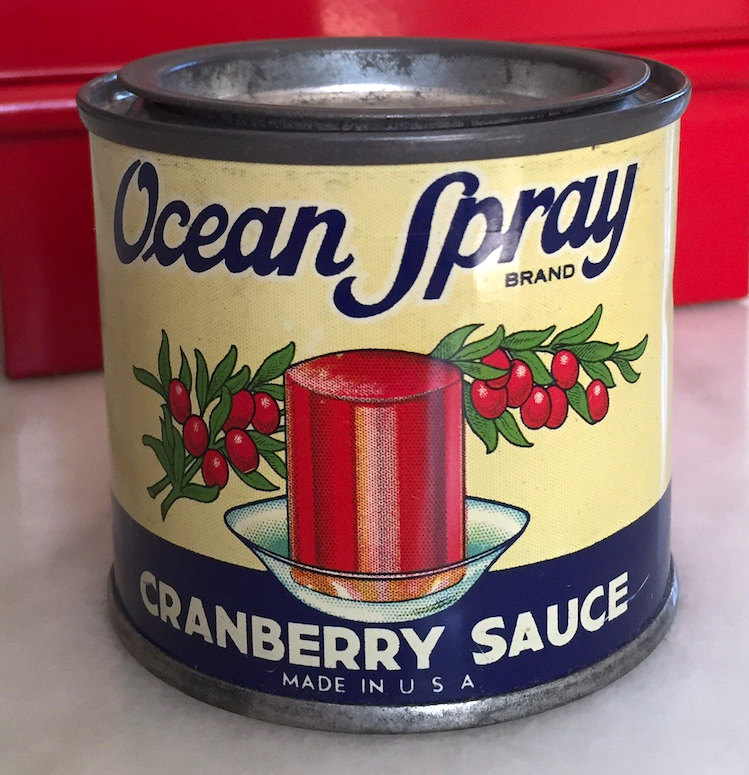
Finally, I would like to give thanks for that favorite from my childhood, jellied cranberry sauce. To this day, it still is not a proper Thanksgiving meal unless I see that cylindrical cranberry shape, complete with perfect can marks, jiggling on a plate.
Posted in Uncategorized | Comments Off on Still Thankful |
“Meditation is as important as lifting weights and being out here on the field for practice. It’s about quieting your mind and getting into certain states where everything outside of you doesn’t matter in that moment.”
~ Russell Okung, Los Angeles Chargers (formerly with Seattle Seahawks)
QB Russell Wilson in easy pose with gyana mudra (Peter Yang for ESPN)
It may seem somewhat against type for a California yogi and ethically-conscious omnivore to be a football fan, but I am. My favorite team is the Seattle Seahawks, partly because I’ve always loved the style of Northwest Coast art (that of Pacific Northwest Native Americans) that inspires the Seahawks logo, but also because of the team philosophy implemented by their coach, Pete Carroll. Since 2011, the Seahawks have included mindfulness meditation in their training program. Yoga has been a mandated part of the team’s physical workouts since 2013.
Not only the Seahawks team members, but also the Los Angeles Clippers, LeBron James, Kevin Garnett, Blake Griffin, Dirk Nowitzki, Stephen Curry, Kobe Bryant, Misty May Treanor, Kerri Walsh, Barry Zito, Carli Lloyd, Aaron Rogers, Kevin Love and more have incorporated yoga, meditation or both into their personal and professional routines. Yoga poses can help prevent injury by making the body more flexible. Meditation can have a similar effect for the mind, by helping to keep your focus in the present moment and on your breath.
As the holiday season approaches, beginning just a few minutes a day of mindful meditation practice will help you to feel more flexible mentally and more grounded and centered emotionally, enabling you to enjoy, rather than rush through the rest of the year. Here is a simple conscious breathing exercise that you can do standing, sitting or lying down:
Stand with your feet about hips distance apart, arms at your sides, shoulders back, head and neck softly lifted, as if an unseen hand were helping to hold you up. Tuck in your abdominal muscles to support your back and lift your chest slightly, as if you just got good news. Or Find a comfortable seated position, arms resting on your lap, sitting upright with feet on the floor, shoulders back and neck softly lifted. Or Lie down, knees up or supported with a pillow, shoulders lightly back and lower back gently pressed to the surface beneath you. Tuck your chin in a bit towards your chest.
Begin breathing in slowly, through the nose if you can, allowing your belly to rise first and your chest last, as you fill your lungs. Placing your hand lightly over your solar plexus (just below your rib cage) can be helpful in training yourself to do this.
Let your abdomen expand and your lungs fill with air completely. Exhale slowly, also through the nose, squeezing out the last bit of breath using your upper abdominal muscles.
Begin again with a new inhale.
Now count slowly as you breathe in. As you exhale, try to slowly extend your breath to match the count of your inhale.
As you continue to breathe in and out, find a fixed point in the distance in front of you to softly focus on. This is your “now.” Let everything else around this point blur. If you are lying down, you can close your eyes and focus on the spot just above and between your eyebrows, perhaps imagining a pink or lavender rosebud opening and closing there as you inhale and exhale.
Practice this simple meditation for 3 minutes a day to start. Try it just before bedtime, upon awakening, at your lunch break, before you begin your commute, just before the relatives arrive for dinner, or whenever you need to stop, breathe and do some intentional grounding.
“Feelings come and go like clouds in a windy sky. Conscious breathing is my anchor.”
~ Thích Nhat Hanh
~~~~~~~~~
Meditate on the deliciousness of Polenta with Sage and Walnut Pesto
Polenta with Sage and Walnut Pesto Polenta is a traditional Italian dish made from corn. You can find packaged prepared polenta, ready to slice and grill or sauté, in most supermarkets. This dish compliments poultry well, making it a tasty Thanksgiving side. The pesto by itself is also delicious with pasta, in soups or as an appetizer served with bread.
Sage and Walnut Pesto Ingredients:
1/2 cup walnuts (plus 1/8 cup extra for garnish)
1/2 cup fresh sage leaves
1 cup fresh Italian (flat leaf) parsley, chopped
3/4 cup extra virgin olive oil
1 large clove of garlic, chopped
1 tablespoon fresh lemon juice
1/4 cup grated Parmesan cheese
1/4 cup grated Pecorino Romano cheese
(or 1/2 cup grated Parmesan/Romano blend)
For Polenta:
2 tablespoons extra virgin olive oil
1 (18oz) package organic precooked polenta
To make pesto:
Toast nuts in a large, dry skillet over medium-high heat for 3 to 5 minutes, stirring often. Let cool.
Combine remaining pesto ingredients with 1/2 cup of the toasted nuts in a blender or food processor. Blend until smooth, stirring a few times between pulses.
To prepare polenta:
Slice polenta into 1/2″ thick slices. Dab excess liquid with a bit of paper towel, if necessary.
Heat olive oil over medium heat in a large non-stick skillet. When oil is hot, carefully add polenta slices, a few at a time, in a single layer (watch out for splatters). Season with a bit of salt and freshly ground black pepper. Fry 2 to 3 minutes, then turn with a spatula, season, and cook 2 to 3 minutes on other side.
Drain briefly on paper towels to remove excess oil. Serve polenta slices hot and topped with the pesto and a few of the reserved toasted walnuts.
“The changing of Bodies into Light, and Light into Bodies, is very conformable to the Course of Nature, which seems delighted with Transmutations.”
~ Sir Isaac Newton, Opticks (1730 ed.)
My first car was a 1962 Mercury Comet that I purchased for $1,100 from a co-worker. Cherry red, with red, ivory and silver interior, it was my pride and joy for years. As it was my only car, its coolness was eventually outweighed by my need for reliable transportation, and I was forced to sell it in favor of a newer, more practical Toyota.
Although climate change and its effects on the future of life on our planet are concerns I take very seriously, my career requires me to have a car. For years that’s been a hybrid, and when my long-running gem finally asks to be retired, I plan to move to an all-electric model.
Believing fossil fuels need to become a thing of the past, I never dreamed that my future would ever include a car as cool as my first. Now, thanks to companies like Zelectric Motors, who are putting Tesla motors into classic cars, a steely beauty with an electric motor may one day be my reality.
The 1962 Mercury Comet s-22
Currently, Zelectric’s conversions are limited to early Porsches and 1958-66 VWs, such as the Beetle, Microbus and Karmann Ghia. However, as this technology becomes more common, the electric vehicle of your tomorrows could include a ’67 Corvette, a ’57 T-Bird or a 1968-73 Opel GT.
See you at the local charging station. I’ll be driving away in the ’62 cherry-red electric Comet.
You can find more information about California company Zelectric Motors here.
These short videos will give you a preview:
~~~~~~~~~
One Bowl Brownies mean less preparation energy and a cleaner-running kitchen.
One Bowl Brownies I invented this recipe late one night when I was overcome with a chocolate craving. You mix and bake these in one pan.
You will need an 8″ x 8″ glass baking pan for these.
1/2 cup plus 1/3 cup organic sugar
1/2 stick of butter (1/4 cup)
1 tablespoon water or brewed coffee
2 ounces unsweetened baking chocolate, broken up
1 large egg
1 teaspoon vanilla
1/2 cup plus 2 tablespoons all-purpose flour
1/8 teaspoon baking soda
1/8 teaspoon salt
1/4 cup chopped walnuts, almonds or cocoa nibs (optional)
Preheat oven to 350°F
Place the sugar, butter and water or coffee in your 8″ square glass baking pan. Microwave on high 1 minute at a time, for 3 to 4 minutes total or until mixture bubbles, stirring afterwards. Add the baking chocolate and stir until melted.
Add the egg and beat mixture well. Stir in the vanilla. Add the flour, baking soda and salt; stir to gradually incorporate. Stir in the nuts or cocoa nibs, if using.
Clean up the sides of the baking pan with a spatula so that batter is spread evenly and cleanly in the pan.
Bake 15 to 20 minutes or until a wooden pick inserted in the center comes out a little bit sticky. Cool completely in pan on a wire rack. Cut into bars.
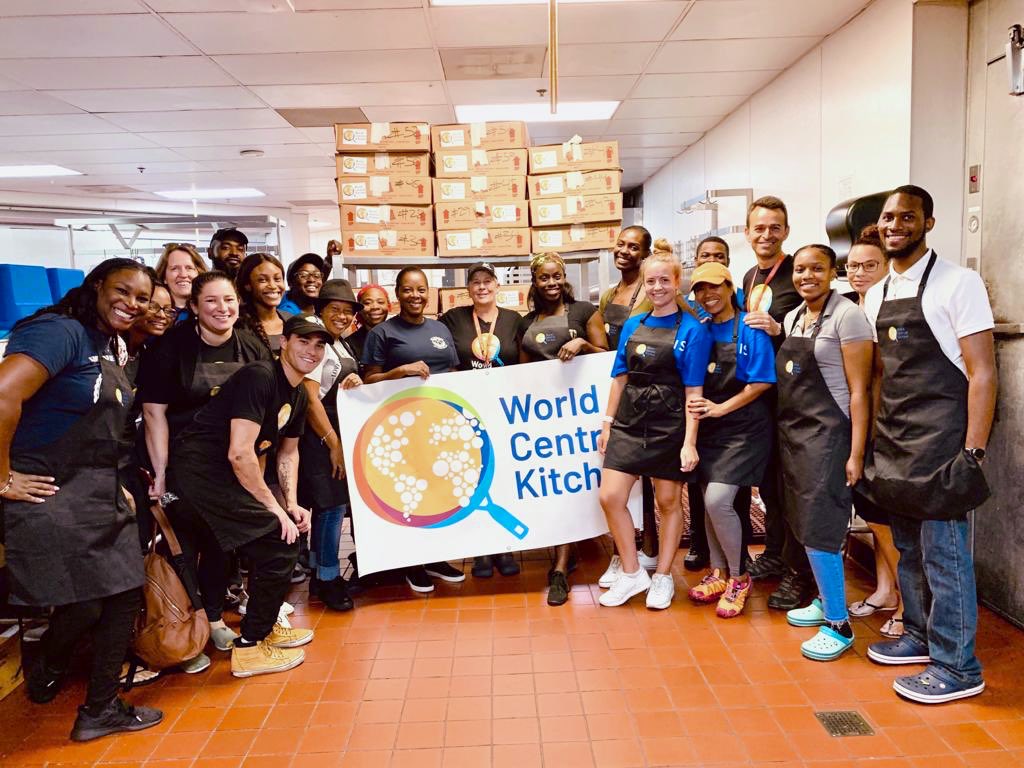
As some of you know already, my mother passed away recently. The new post I was in the process of writing will have to be delayed. In the meantime, I would ask that my readers follow and support the wonderful humanitarian work done by José Andrés and World Central Kitchen. This would be a beautiful remembrance of her. I hope you will be inspired to assist their hurricane relief efforts by donating, volunteering or spreading the word about their hard work and unrelenting determination to relieve hunger and bring hope to people in disaster-affected areas. You can find more about them via the links below:
Read their Hurricane Dorian updates here.
Main page of the organization is here.
Donate to World Central Kitchen and then make some Paella with Artichoke Hearts to share.
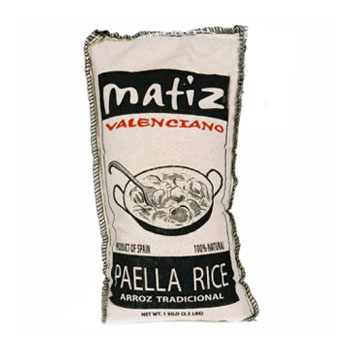
Paella with Artichoke Hearts This vegetarian paella is delicious and easy to make, as long as you use the proper rice. Authentic paella rice imported from Spain is a must. Do not use Arborio rice, asian rice, long grain or basmati rice. The pan is also very important. If you don’t have a paella pan, you can use a large frying pan or braiser, big enough to hold the ingredients.
1/4 cup extra virgin olive oil
1/2 a yellow onion, chopped
4 cloves of garlic (do not peel)
1 (14.5 oz) can diced organic tomatoes
1 (14.5 oz) can artichoke hearts (plain, not the marinated kind), do not drain
1 (14.5 oz) can butter beans, drained
1 teaspoon paprika
32 oz carton of organic vegetable broth
A pinch of saffron threads (6 to 8 threads)
A pinch of crumbled, dried rosemary
1 teaspoon dried thyme
2 cups paella rice
Salt and freshly-ground pepper, to taste
Lemon wedges, for garnish
Drain artichokes, save broth from can and set aside (you will use broth later).
Lightly crush the whole, unpeeled garlic cloves with the flat part of a knife so that the peel remains intact, but the garlic inside can flavor the dish.
Heat oil in pan over medium-high heat. Add onion and garlic cloves. Cook, stirring, until onions are translucent (3 to 5 minutes).
Add tomatoes, reserved artichoke liquid and butter beans. Add paprika and mix well. Stir until simmering.
Add vegetable broth, saffron, thyme and rosemary. Stir and let broth heat until simmering again, then simmer for about 10 to 15 minutes.
Taste and add salt and freshly ground black pepper to your liking. Once you like the taste of the broth, stir in the rice and bring to a boil; then, stir rice once more to make sure everything is evenly distributed. After this step, do not stir again.
Cook over medium heat for 8 to 10 minutes. At this point you can decorate the surface of the paella with the artichoke hearts (just place them on top of rice – do not stir). Reduce heat to low, cover with a tight lid or with foil and cook until most of the liquid is absorbed, about 15 to 20 minutes.
When paella is done, turn off heat and let paella rest, covered, for at least 5 minutes.
“Do your little bit of good where you are; it’s those little bits of good put together that overwhelm the world.”
~ Desmond Tutu
A note: My summer has been a bit hectic thus far. So, having not been able to find the time to write an original post for several weeks, I decided to do a summer rerun and share a post from July 30, 2013, the 3rd year of the blog, which is strangely relevant to current events. The included recipe for Horiatiki (Greek Salad) Tacos is also one of my all-time faves. I hope you enjoy this blast from The Philosopher’s Spoon’s not-too-distant past:
~~~
Both world and local news have been a bit intense recently, to say the least. Times like these, when everyone feels just a little more fragile than usual, can put folks on edge and highlight the differences between us.
Last Thursday I awoke in a slight state of anxiety, a bit depressed by the events of the week. That afternoon, while driving down a local street, I saw a young black cat lying in the middle of the road. I pulled my car over to the side and got out to take a look at this poor kitty, who I assumed was dead. As I bent over him, I realized that he was still breathing quite rapidly and his eyes were open, but unresponsive. I screamed for help, as the cars waiting to pass on the road behind me began to honk. I cautiously picked up the barely conscious kitty and moved him to the sidewalk.
Just then, a man pulled up next to me and got out of his car to look. He offered to take the cat to the local emergency vet. We carefully moved the cat to the back seat of the man’s car. Then a woman who had seen us ran out from her house to tell us she had just called the local Humane Society and that they were on the way. As we debated whether to wait for the technician or rush to the vet, the kitty miraculously regained consciousness and hopped up to the dashboard of the man’s car. He must have been knocked unconscious and in a state of shock when I found him. Now he seemed quite alert and able to move. We all cried with joy. When the Humane Society technician arrived, the woman offered her number in case the cat belonged to a neighbor and the man offered to adopt the kitty if it turned out he had no home. I thanked everyone and left the scene, knowing the cat was in good hands.
Each of us came together on that street out of our love for animals. None of us probably had much in common otherwise but we were able to save that little life because of what we shared. Many things separate us as human beings, but when we focus on what unites us, rather than what divides us, we can come together to accomplish amazing things. It’s simple mathematics:
Imagine three people, each from three different cultures, communities and economic backgrounds. Let us represent them with the fractions 1/2, 1/3 and 1/6. At first glance, there is no way for each of these three to come together. However, if we look beyond the differences and instead look for a common denominator, we see that 1/2 becomes 6/12, 1/3 becomes 4/12 and 1/6 becomes 2/12. And now 6/12, 4/12 and 2/12 can join together as 12/12 or One. That One lives within each of our hearts, needing only to be recognized by ourselves and each other.
“It is only with the heart that one can see rightly; what is essential is invisible to the eye.”
~ Antoine de Saint-Exupery
~~~~~~~~~
Greek-style veggies, marinated feta and tortillas come together for Horiatiki Tacos with Marinated Feta.
Horiatiki Tacos with Marinated Feta Greek Salad (Horiatiki Salata) makes a delicious filling for this super-tasty, virtually no-cook summer meal. This is a vegetarian-friendly recipe, but you can add cooked shrimp as a variation for omnivores. Make the Marinated Feta one day to one week ahead.
Tacos:
1 clove of garlic, smashed
1(15oz) can organic garbanzo beans, drained and rinsed
2 tablespoons fresh lemon juice (plus more to taste)
1/2 teaspoon crumbled dried oregano
Salt and freshly-ground pepper to taste
2 green onions, trimmed and chopped (green & white parts)
1 cup finely chopped bell pepper
1 cup diced cucumber
2 cups diced ripe heirloom tomatoes
8 (approximately 7″) flour tortillas or lavash-style flatbreads
Marinated Feta (recipe below)
In a large bowl, stir together garlic, beans, lemon juice and oregano. Add salt and pepper to taste. Remove and discard garlic clove. Add onions, bell pepper, cucumber and tomato (if you are using shrimp, add them here). Stir and taste for seasoning. Add more salt, pepper and lemon juice, if needed. Set aside.
Heat tortillas over a low stove flame, using tongs to circulate the tortilla over the flame. Turn when it begins to puff and then heat the other side (do not leave unattended!). Alternatively, you can microwave tortillas in a microwave-safe plastic bag for about 30 to 60 seconds or until steaming. Keep warm in a basket or bowl covered by a damp towel.
Serve filling alongside Marinated Feta and warm tortillas. Have guests make their own tacos (use a slotted spoon to serve the salad) by filling the tortillas with some salad, topped with the Marinated Feta.
Serves 8 (more with shrimp added)
Marinated Feta You will need a pint or quart-sized glass jar with a lid.
About 8oz Feta cheese, crumbled
1 or 2 small, whole hot dried chillies
Several sprigs of fresh dill
and
Several sprigs of fresh mint
or
Several sprigs of fresh rosemary (or sub some crumbled, dried rosemary)
and
Several fresh basil leaves, chopped
1 teaspoon whole black peppercorns
Zest of one small lemon
Extra virgin olive oil to cover (about 1 & 1/2 cups)
Combine Feta, herbs and seasonings in jar. Cover with oil. Seal jar and shake gently.
Marinate in fridge several hours or overnight. Shake a few times during marinating time.
Use leftover oil in jar to toss with cooked pasta, rice, salad or as a dip for bread.
“Be still, sad heart, and cease repining; Behind the clouds is the sun still shining.”
~ From “The Rainy Day”, by Henry Wadsworth Longfellow
Last night I set out my bikini, all ready to celebrate the Summer Solstice poolside. Before sunrise, the sound of raindrops on the roof woke me briefly from a pleasant dream. Later, when I got up and opened my bedroom curtains, the ground outside was wet and the clouds were thick in the sky above. My poolside sunning would have to wait.
On a positive note, a Summer Solstice like today’s offers the perfect opportunity to remember that our Sun is there, even when we don’t see it. Whether obscured by a cloudy day or evening’s horizon; merely reflected by the moon or on a dark night when even the moon is not visible, we can align our thinking with our awareness of its light or the fear of its absence, but it remains steadfast and shining, whatever our focus.
That was a metaphor, in case you were wondering. And now for something completely delicious…
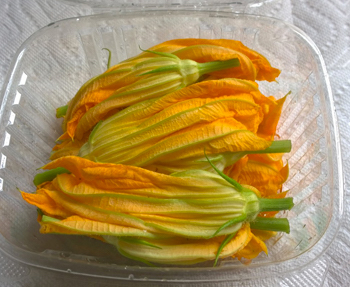
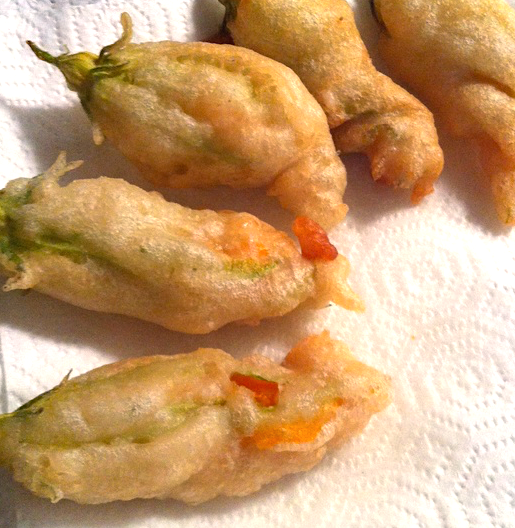
Picture a beautiful, golden flower with bright, yellow petals bursting out from its center like rays of light streaming out from the summer sun. Now imagine those tender petals filled with warm, melted mozzarella cheese after being battered and fried into a crispy ball of guilty summer pleasure. That flower belongs to the zucchini plant and the delicacy I just described may be found in restaurants and kitchens all around Rome this time of year. Fiori di zucca ripieni fritti or Fried Stuffed Zucchini Flowers, are an Italian summer favorite that will make you fall in love at first bite.
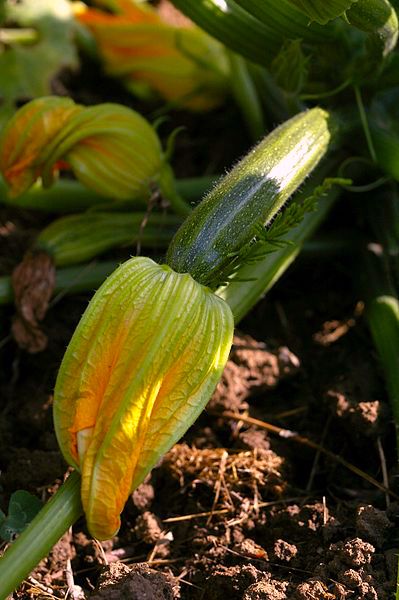
Although not yet common in American grocery stores, you can find zucchini flowers, also known as squash blossoms, here at local farmers markets, occasionally at a Whole Foods produce section, or growing in a friend’s garden. You will want to pick or purchase them no more than a day before you cook them. Here’s what you are looking for:
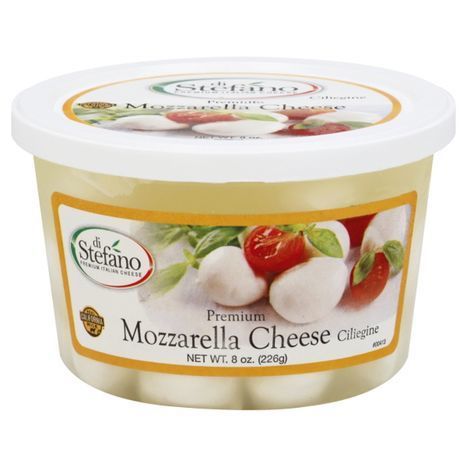
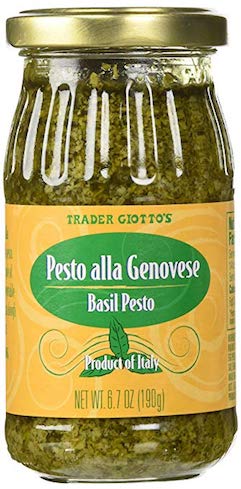
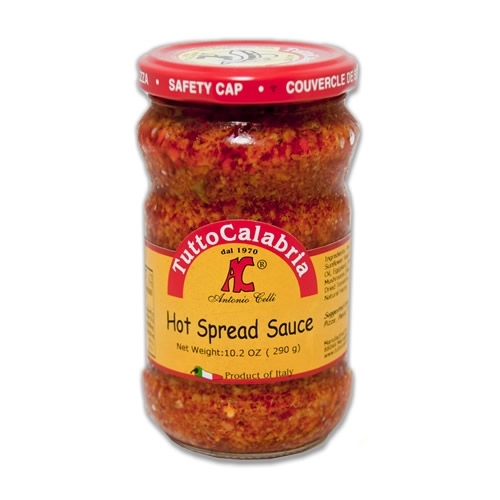
You rinse and dry the flowers, remove the stamens inside, then stuff the centers with tiny chunks of fresh mozzarella, or the small, ready-made balls known as ciliegine (Trader Joe’s and Whole Foods both carry ciliegine). Traditionally, one also adds a bit of anchovy or anchovy paste, but I prefer to substitute a tiny bit of basil pesto or some hot chili spread:
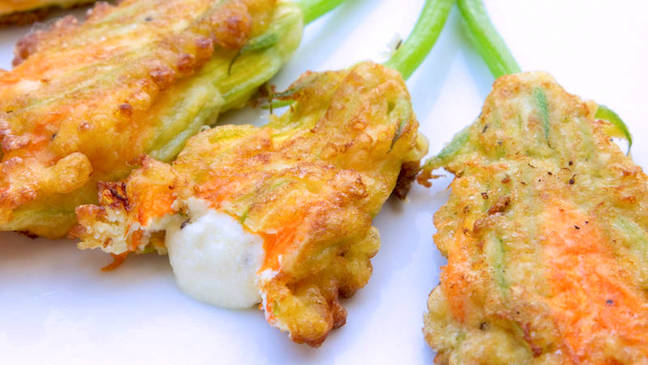
After stuffing, the ends of the flowers are lightly twisted to enclose the filling. Then you prepare a simple tempura batter (see recipe below); fill a frying pan about 2-3 inches high with sunflower oil and heat to 350°F. Dip each stuffed flower into the batter to coat completely and fry until golden and crispy:
I can’t write enough OMGs and yums here to adequately convey the utter deliciousness of these hot, crispy, gooey, cheesy, delicately-zucchini-ish morsels.
Here is my recipe. Below that is an instructional video by Lucrezia Oddone, an Italian language YouTuber that I watch. The dialogue is in Italian, but just follow my recipe and watch the video to help you visually understand the process. Maybe one of these days I will start making my own videos, but for now, I’ll take the opportunity to share Lucrezia with you. If any of you are interested in learning Italian, she has lots of fun and helpful videos at her channel.
Fried Stuffed Zucchini Flowers (Fiori di zucca ripieni fritti) This recipe will serve 4. You can halve or double it easily.
12 zucchini flowers (squash blossoms)
6 oz of fresh mozzarella, cubed or ciliegine balls, halved
Some prepared basil pesto or chile spread/oil
1/2 cup all-purpose flour
1/2 cup cornstarch
1 cup ice-cold sparkling water
1 egg, lightly beaten
Pinch or two of salt
Oil for frying
Remove stamens and cut down stems from blossoms. Wash and pat dry.
Stuff each blossom with a cube or ball or half ball (depending on flower size) of mozzarella and about 1/4 teaspoon of pesto or chile spread (more if pesto, less if using chile spread/oil). Twist ends of petals to enclose stuffing and set on a plate until ready to fry.
Fill a frying pan with about 2-3 inches of oil. Heat over medium-high.
While the oil is heating, make the tempura batter:
Use a fork, not a whisk to mix this. Stir the flour and cornstarch together. Stir the ice-cold sparkling water into the beaten egg, then add the flour and cornstarch mixture and a pinch of salt. Stir just until combined; do not over mix; you want some lumps.
Test that your oil is ready by placing a drop of tempura batter in it. You can also add an unpopped popcorn kernel when the oil is just beginning to heat. It will pop when oil is ready. Remove and begin frying.
Gently dip a filled flower to coat in the batter completely and carefully lay into oil. Continue with a couple more (don’t crowd pan or you will lower oil temperature). Keep batter cold in fridge between batches. Fry flowers about 2-3 minutes, turning gently with tongs or slotted spoon if needed, until golden and crispy (note: in the video below, Lucrezia removes hers a bit sooner than I would). Drain on paper towels as you finish frying all of the flowers. Sprinkle with a bit of salt, if desired. Serve hot.
As Lucrezia says in her video intro, Fried Stuffed Zucchini Flowers are fantastic, spectacular and you must absolutely try them!
Posted in Uncategorized | Comments Off on A Bouquet of Yum in the Summer Sun |
“We must learn to reawaken and keep ourselves awake, not by mechanical aid, but by an infinite expectation of the dawn.”
~ Henry David Thoreau
“It ain’t over till it’s over.”
The phrase first uttered by baseball legend Yogi Berra about the 1973 National League pennant race is a quote that comes in handy when folks need a bit of hope or inspiration in order to persevere when all seems lost.
A flightless bird, endemic to a coral island in the Indian Ocean, is proof that, even when it’s over, you can still make a comeback. This species of bird evolved and went extinct and then re-evolved within the space of a few thousand years.
The Aldabra rail, named after the Aldabra Atoll, its island home in the Indian Ocean, is an example of the rare phenomenon known as iterative evolution, which describes how a particular species from the same bloodline can come back into existence over and over gain, in spite of previously becoming extinct.
These invincible flightless descendants of the white-throated rail (pictured above), were totally wiped out about 136,000 years ago, when sea levels rose to consume their island habitat. According to a recent study, published in the Zoological Journal of the Linnean Society, sediment and fossil records from the island show that a few thousand years later, after sea levels had receded, another member of the rail bird family colonized the island again and re-evolved into the same flightless species that had come into being before the extinction event.
With the global temperature increasing and the warming of oceans and consequent sea level rise threatening not only the island home of the Aldabra rail, but ecosystems and life all over our world, it is imperative that we humans do everything we can individually and collectively to reduce carbon emissions, stop climate disruption and reduce its impact.
We need both determination and hope in order to adapt and make the necessary changes to protect life and quality of life on our home planet. Don’t let anyone ever convince you it’s over and that nothing can be done. The process by which big changes are accomplished is often iterative. If you find yourself feeling overwhelmed by the many real challenges we currently face, pull back for a bit; then be like the Aldabra Rail and keep coming back.
“If you fell down yesterday, stand up today.”
~ H.G. Wells
~~~~~~~~~
Rediscover the almost 100 year-old recipe for Original Green Goddess Salad Dressing, created by Philip Roemer at the Palace Hotel in San Francisco.
Original Green Goddess Salad Dressing This tarragon-flavored dressing is outstanding, but very rich. It works well on any bold-tasting greens such as arugula or romaine. It is also wonderful with cold chicken or shrimp. Modern variations include avocado, yogurt or sour cream, but the original is mayonnaise-based. If you have no dietary restrictions that would prohibit an ingredient below, I recommend you follow the recipe exactly. The original became famous for a reason.
4 anchovy fillets (2 teaspoons)
1 green onion, trimmed and chopped (both green and white parts)
3 tablespoons chopped Italian parsley
2 tablespoons chopped fresh tarragon
1 & 1/2 cups organic mayonnaise
1/4 cup white wine vinegar
1/4 cup chopped fresh chives
1 small clove of garlic
Combine ingredients in a blender. Blend until smooth, green and creamy. Pour into a container, seal and chill in the refrigerator until serving time. Leftovers keep for several days in the fridge.
Makes about 2 cups
Posted in Uncategorized | Comments Off on Re-evolutionary |
“I love talking about nothing. It is the only thing I know anything about.”
~ Oscar Wilde
For the past month, I’ve been working steadily on an editing job for a friend. The project is unique and inspirational, and I have thoroughly enjoyed the work, but it has kept me away from this blog for a bit. We are now past the first week of May and, until today, I had posted nothing since the beginning of April. Nothing isn’t necessarily a bad thing, though. In fact, the word may is not only the name of the current month, it is also a modal verb, indicating possibility or potential. Nothing is something that is full of potential.
Several years ago, physicists and philosophers gathered at the American Museum of Natural History to debate the concept of nothing. They put forth various theories and opinions, which all seemed to demonstrate that what we think of as nothing is really something. If I had been there, I would have argued that nothing is something that may contain everything.
To illustrate that nothing can contain everything, I’ll use the example of the number line in mathematics, a concept that illustrates real numbers, showing positive numbers at the right and negative numbers at the left, with zero in the center:
I have often imagined both sides of this line turning up vertically, with zero at the bottom, and each number facing its opposite. Since +1 and -1 combine to make zero, as does every other pair of opposite numbers, this line would close into itself like a zipper, as each pair of opposites found each other and dissolved themselves together, back into zero.
Zero may seem like nothing, but the potential for everything lives within it. In fact, between each of those whole numbers I just described lies the possibility of smaller and smaller slices of numbers: 1.1, 1.11, 1.111, and on and on, infinitely.
The possibilities within you for new ideas, new inspirations and new choices are also infinite, but sometimes creating new things requires a bit of space, a bit of nothing.
Ebb tide enables a clean space for castles to be built and messages to be written in the untouched sand. Paintings are created on top of a clean canvas; ideas and plans are put forth on a white board or blank page and films are projected on an empty screen. Organizational experts often recommend pulling everything out of drawers or closets in order to choose what to keep, what to let go of and what shape the newly-emptied space will take.
When you need a new idea, a fresh perspective or a bit of inspiration, or even in those times when you’re not sure what you want, it is important, often necessary, to make yourself some space. If your mind, heart or calendar seems cluttered with an infinite succession of stuff, give yourself the gift of nothing. Like tilling the soil in a garden or plowing a field in order to plant a new crop, clear away some downtime, some quiet time for yourself. Set aside one day per month with nothing “to-do” on your calendar. If you can’t find one day, make the space for at least an hour of alone time. Take a walk, soak in a tub or simply carve out 30 minutes each day when all devices are off. Give yourself permission to not do, even if it’s just for a bit.
Imagine everything that may be waiting to be discovered within just a little bit of nothing.
Photo courtesy Beverlee Moreno Ring
~~~~~~~~~
Maple Chicken Brunch Sausages are a delicious treat for Mother’s Day, Father’s Day or any day.
Maple Chicken Brunch Sausages Homemade sausages are a delicious treat and easier to make than you think. By forming the mixture into patties, instead of filling a casing, you can cook and serve or freeze and heat at your convenience; no smoking or curing necessary. Use pastured, organic or free range chicken for a better flavor, more humane process and healthier product.
In a medium bowl, mix together all ingredients except the olive oil. Cover and chill for 30 minutes.
To form the patties:
Rinse hands in cold water. Divide mixture into ten portions and shape each into a 2 & 1/2-inch disk.
Lightly coat a non-stick skillet with olive oil and heat on high. Fry the sausages on both sides until completely cooked through and golden brown, about 4 minutes per side. Drain on paper towels and serve immediately. Cooked sausage patties can also be fully cooled, wrapped and frozen for oven or microwave reheating.
Makes 10 sausage patties
Posted in Uncategorized | Comments Off on Nothing is Everything |
“For every action, there is an equal and opposite reaction.”
~ Sir Issac Newton’s Third Law of Motion
(Philosophiae Naturalis Principia Mathematica, 1687)
Spring is officially here, ushered in a couple of weeks ago with the Spring Equinox. Also known as the Vernal Equinox, its name signifies one of two times during the year when day and night are of nearly equal length. On the first day of summer, the longest day of the year, the scales are tipped in favor of the Sun. At Winter Solstice, they lean all the way into the night. However, each of these extremes are guaranteed to balance themselves at least twice a year, in autumn and in spring. Within the space of one year, the Earth revolves completely around the Sun as our planet rotates on an invisible axis. Think of a spinning top that tilts slightly as it whirls around. The four seasons are determined by the direction of Earth’s tilt in relation to the Sun and the angle of the Sun’s light as it hits the Earth.
This dance of the seasons relates to the balancing poses that I teach in yoga. I remind students that we refer to this category of poses using the gerund because the process of finding our way to balance is continual. Balancing, like dancing, is an activity, not a fixed state. One of the best examples of this is Mountain Pose (Tadasana), which almost anyone can do, even if they have never studied yoga. There is a subtle metaphor for earthly life to be found within this simplest of poses. If you’d like to give it a try, here’s how:
Stand with your feet about hip or sit bones distance apart. Even out the weight across your two feet and within and around the sole of each foot. Lift up from the top of your head as if an unseen hand were helping you. Gently tuck your tailbone forward and draw your abdominal muscles and back muscles in around your center of gravity. Lift your chest, not in military fashion; lift it expectantly, like you just received good news. This will cause your arms to open slightly, which should remain at your side, slightly out from your hips. Now, fix your gaze to a point out in front of you: a dot on the wall or carpet, a leaf or flower or blade of grass. Let everything else around this single point softly blur. That point is your “now”.
In less than a minute you will realize that simply standing upright, on our own two feet, requires constant adjustment. Some days the corrections are big and sometimes they are nearly imperceptible, but we make them and return to equilibrium.
On those days when the world seems to be spinning out of control, leave big adjustments to a power greater than yourself. Call it physics, call it God, call it the Universe; you already know how to surrender to an idea, to a mystery. After all, as we stand on this ball of earth, spinning around the Sun at approximately 67,000 miles/110,000 kilometers per hour, we trust an unseen force we call gravity to keep us from flying off and out into space… and it does.
Remember that, no matter how long the nights or how sunny things do or don’t look, balance will always restore itself. Just like day and night are guaranteed to find their way to balance, so will world events, the scales of justice, your personal equilibrium and anything else that may, at times, feel tipped a little too far to one side or the other. Like the two equinoxes of the year, those corrections will come according to their own timetable, which is not necessarily yours. You might as well enjoy the dance. Keep your focus on that center of gravity that is always within you and make your adjustments as needed. That equal and opposite reaction is on its way.
“Let your life lightly dance on the edges of Time
like dew on the tip of a leaf.”
~ Rabindranath Tagore
Watch Newton’s Third Law demonstrated at zero gravity:
~~~~~~~~~
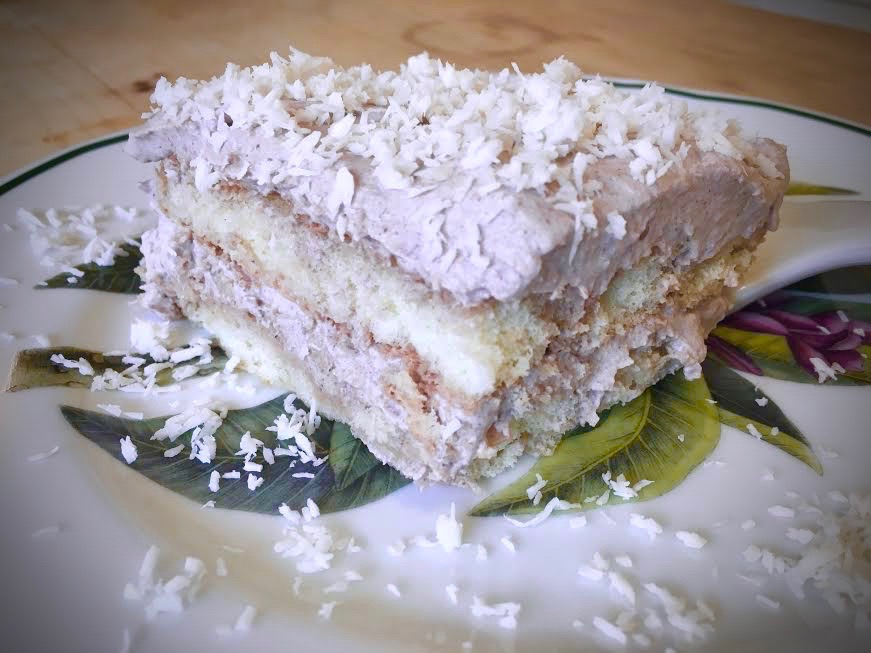
Celebrate the balance between red and blue that is the color purple with Ube and Coconut Tiramisù.
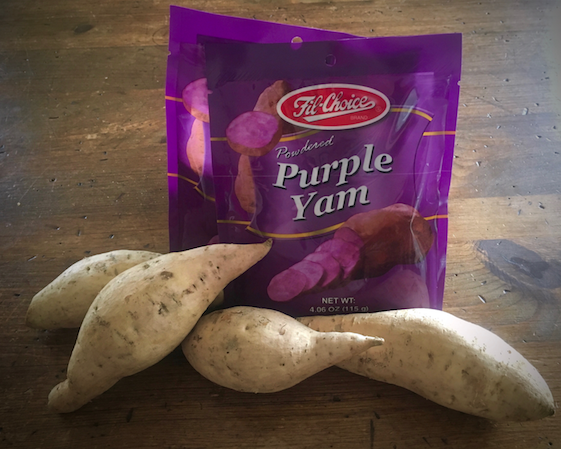
Ube and Coconut Tiramisù Ube is the name for a purple-colored yam that is a well-known dessert ingredient in Filipino cuisine. If you are Filipino or have friends or family with Filipino ancestry, you have probably been one of the lucky ones to discover the deliciousness of ube ice cream and cakes. This tiramisù is my Italian homage to the Filipino staple. You can easily find powdered ube online (here). If you live near a Filipino market, you can find it in person and, probably, at a better price. Plus, it’s a great excuse to explore and try new foods. I got mine (as well as a pint of Magnolia ube ice cream) at the local Seafood City market.
When mixed with cream, the natural purple color of this yam creates a lavender tint that is striking. Some like to intensify this effect with a few drops of food coloring. I chose not to, but plant-based food colors are available at Whole Foods markets, so you can feel free to brighten up the purple-ness and still keep it “natural”.
Ube prepared as a savory dish is less common, but just as tasty. At a previous trip to Seafood City, I bought some fresh ube yams and brought a pan of roasted ube, cut into chunks and cooked with a little salt, pepper, maple butter and crushed coconut chips to a Thanksgiving celebration last year. The dish was a big hit and even got a thumbs up from my friend’s Filipino-born mom.
Notes for this recipe: I used coconut sugar for a more authentic flavor, but regular cane sugar or light brown sugar are both fine. Also, make sure to get traditional, crisp ladyfingers. Trader Joe’s carries a soft version, but you want the crisp ones that are available at Whole Foods or at any market with a good Italian or gourmet section.
*If you can’t find light coconut milk, just use a mesh strainer to strain out the solids from regular coconut milk. Save those solids and use to add richness to curries, veggies or soups.
Ingredients
3 tablespoons Ube powder (powdered purple yam)
1 & 1/2 cups water
1/2 cup plus 2 tablespoons organic sugar
1 teaspoon vanilla extract
1 (80z) tub of mascarpone cheese
1 cup heavy cream
1 cup light coconut milk*
1/4 cup dried coconut flakes (unsweetened)
1 (7oz) package of ladyfingers (savoiardi)
Equipment you will need:
Electric mixer
An 8-inch square pan
Or
6 goblets or short, wide glasses, small mason jars or small glass bowls.
Instructions:
In a small, heavy saucepan, over medium-high heat, combine the ube powder with the water and bring to a boil, stirring. When it begins to boil, reduce the heat to medium-low and continue stirring, first frequently, then constantly, until it becomes like a thick puree (about 25 minutes). As you stir, be sure to scrape the bottom and sides of the pan, so that the mixture doesn’t stick to the pan and thickens evenly. After you’ve reached the desired thickness, remove the pan from the heat and continue stirring a minute or two more as the bottom of the pan cools. You should end up with about 1 cup of ube puree. Let the puree cool completely before continuing with the recipe.
While the ube is cooling, chill your beaters and a medium-sized bowl in the fridge (this will help your filling to whip better). You may want to pull your mascarpone out of the fridge at this time, so it is softer when you mix it.
To make the tiramisù filling:
Stir 1/2 cup of the sugar and 1 teaspoon vanilla into the cooled ube puree and stir with a rubber spatula or large spoon until combined and smooth.
Pull your chilled bowl and beaters from the fridge.
Add the mascarpone and heavy cream to the bowl and whip with an electric mixer (more slowly and carefully at first, so as not to make a mess) until whipped to stiff peaks. Add the sweetened ube puree. Incorporate this into the whipped mixture using a rubber spatula at first, then with the electric mixer on low, stopping a couple of times to scrape the sides and bottom of bowl with the spatula, until fully incorporated, thick and creamy. Cover and set in fridge while you prepare your coconut milk cookie bath and set out your pan or glasses.
In a shallow bowl, stir remaining 2 tablespoons of sugar into 1 cup of light coconut milk and stir until dissolved. Set aside 1 tablespoon of the mixture to moisten your coconut flakes. Dip both sides of a ladyfinger cookie into the coconut milk and place in position to line the bottom of your pan. Continue with 1/2 of the cookies, breaking up some to fit in the odd spaces, as needed. If you are using glasses or small bowls, break up and dip the cookies to fit into the bottom of the smaller containers.
Scoop half of your filling over the cookie layer and spread it out evenly. For glasses/bowls, divide half the filling among the containers.
Make another layer of cookies over the filling, dipping both sides of each ladyfinger into the sweetened coconut milk as you go. Top this with the remaining half of the filling and spread out evenly. For glasses/bowls, repeat with the last half of the cookies, then divide the rest of the filling over the tops.
Cover with plastic wrap and chill the tiramisù in the refrigerator for 6 hours or overnight. Also cover and chill your reserved sweetened coconut milk and keep in fridge until just before serving.
Before you serve:
In a small bowl, add the coconut flakes and pour the reserved coconut milk into it. Stir until coated evenly and set aside for several minutes while it moistens. Give it another stir.
Pull out the tiramisù. Sprinkle the sweetened coconut flakes over the top(s) and serve.
Serves 6
Posted in Uncategorized | Comments Off on Newton’s Third Law |
To access the Home Page of the blog, where you can scroll down through all the previous posts back to July 2014, click on the blog title The Philosopher’s Spoon Blog, located at the top left of the page.
For information about the author and her work as a Certified Yoga Therapist (C-IAYT), click the links located at the top of the sidebar column at left under the Menu heading. You can also contact Gina via her page on the International Association of Yoga Therapistswebsite.
“In a time of destruction, create something.”
~Maxine Hong Kingston
Thank You to the Plants…
An analysis on observational studies on the relationship between caffeine and depression found that coffee and caffeine consumption were significantly associated with a decreased risk of depression.

















Recent Comments